Recently I came across the concept of “extreme day trips”, a growing phenomenon in Europe and the UK. The concept is simple: take an early morning flight to a destination, spend the day there, then fly back late afternoon or early evening. To me, this sounds terrible for multiple reasons: the rush, the exhaustion, the relative amount of time spent on airports, and the constant worry about missing the return flight. But more importantly: how do you get to know a place when you have to run through it in a day? And how much are these type of flights contributing to climate change? It’s literally the travel equivalent of disposable single-use plastics. But our planet is not disposable, so let’s dive into the alternative: slow travel.
What is slow travel?
Slow travel will probably be defined in different ways by different people. Nevertheless the thing they will have in common is what’s in the name: slow. This means travelling in a way that is opposite to extreme day trips. It means to taking the time to explore your destination, instead of rushing from one place to the next to snap a quick photo. This way you can truly indulge yourself in the nature or culture that you are visiting, without having to keep an eye on your watch all the time.
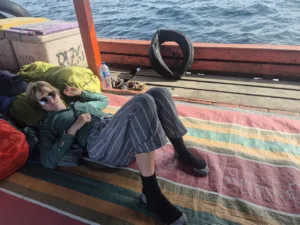
Examples of slow travel
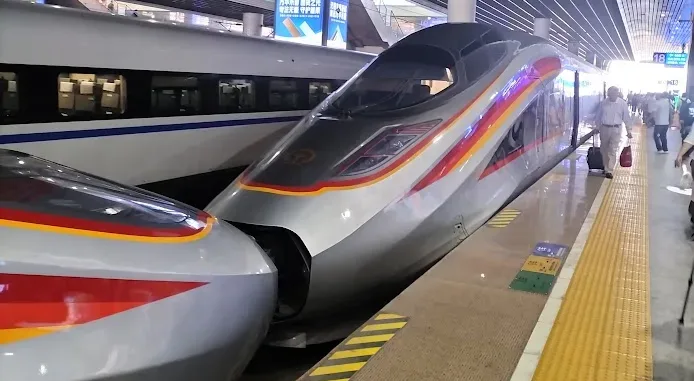
An example of slow travel could be to use a slower mode of transport, such as a train or a car, instead of a flight. You could even decide to walk or take a bike to transport yourself. Surely this will impact the distance and time of your trip, but isn’t that the point? It will allow you to explore the place that you encountered in more depth, making you feel like you have truly seen them. Choosing your mode of transport isn’t limited to how to get to a certain destination. You can also choose to travel slower when you’re already there. The process of travelling itself will be part of the trip, rather than a necessary evil. You may even enjoy it.
However literally moving slower is not the only form of slow travel. You could also decide to take more time for the places you visit. So instead of seeing Paris in three days, plan five days, or even a week. It opens possibilities of lingering in a museum for a whole day, taking an art class, going to a fashion show, or trying out all the different bakeries. The possibilities are endless.
More than pace
For me personally, slow travel is more than literally travelling slower. It often goes hand in hand with more genuine experiences, local encounters, and finding more sustainable and ethical ways to travel. Choosing local transport, supporting local businesses and connecting with the local people are always to do this. If you do this right, you will end up with a richer experience, a new friend or two, and a smaller carbon footprint. I will explore each of these topics in more detail in the following paragraph.
Why would I choose to travel slower?
The impact on your journey
“It’s about the journey, not about the destination.” A cliché it may be, but it’s definitely one that holds a truth. The most memorable parts of my holiday are often not the ones that were completely planned. The best memories are certainly not the most popular tourist attractions or the Instagramable hotspots. Instead, the best memories are often in getting to know local people while you spend eighteen hours on a local bus. They are in getting stuck in a remote village, because there was no bus. They are in walking past the viewing platform to find that the view is even better just around the corner, where, moreover, no one is blocking your view. And they are in being invited to someone’s home to have a meal with them and meet their family.
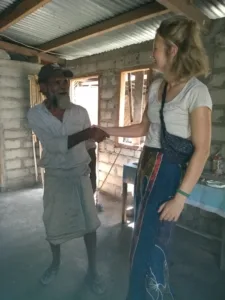
Travelling slower does not mean that you should not visit the top ten tourist attractions in your holiday destination. After all, they are popular tourist attractions for a reason. However, finding a balance between hopping from highlight to highlight, and taking the time to get to know a place can set you up for so much more than just a pretty photo. It can set you up for an unforgettable experience, for a new friend, and for a unique story to tell to your friends and family back home.
The impact on the environment
The beauty of travelling slower is that impacts more than just your own journey. Making conscious choices about where to go, how to get there and how long to stay can have a tremendous effect on the environment. And since many of us travel to see how beautiful the world is, wouldn’t it be nice if we can contribute to keeping it this way? Well, we can! To show you how, I would like to start by showing you some numbers.
You can imagine that the extreme day trips from the introductioimpact Compare environmental impact of different modes of transport
Five climate adaptation ideas to watch in 2026 | News | Eco-Business | Asia Pacific (maybe in next chapter?)
The impact on your destination
Last but not least
- local communities
- gentrification
Ways to travel more slowly
- Rome2Rio
Photos (including header)! SEO! Links!